

The Gut-Hormone Connection: What the GI-MAP Reveals About Your Hormones
If you've been told, "Your labs look normal," but you know you don't feel normal, this is for you.
Maybe you've been dealing with digestive issues for years. Maybe your iron keeps dropping no matter how much you supplement. Maybe suddenly you seem to react to foods you used to tolerate. Maybe you're struggling with painful periods, endometriosis, hormonal imbalances, thyroid issues, or infertility - and you're frustrated because nothing seems to explain the whole picture.
I've found that sometimes, we have to zoom out.
Instead of looking at each symptom separately, we need to ask how the systems of the body are communicating with each other.
And the gut is a major part of that conversation.
The GI-MAP gives us an opportunity to look much deeper at the gastrointestinal environment - including the microbiome, H. pylori, digestion, inflammation, and immune activity - and determine whether something happening in the gut could be contributing to what you're experiencing elsewhere.
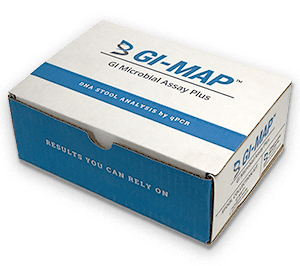
What Is the GI-MAP?
GI-MAP stands for Gastrointestinal Microbial Assay Plus. It is a comprehensive, DNA-based stool test that provides a detailed readout of your gut's microbial ecosystem and functional status.
Unlike traditional lab stool cultures—which rely on growing live bacteria in a dish—the GI-MAP uses quantitative Polymerase Chain Reaction (qPCR) technology. Instead of just telling you if a microbe is present or absent, qPCR measures the exact quantity of microbial DNA in your sample. It picks up tiny traces of organisms that conventional tests often miss.
Rather than simply asking "is something there or not," it helps us understand:
What microbes are present, and in what quantities
How well you're digesting and absorbing nutrients
How your immune system is responding
How well your gut barrier is functioning
And most importantly, how all of this may be driving your hormone symptoms
This last point is what makes the GI-MAP so valuable in my practice. Plenty of women with significant gut imbalance have no obvious digestive complaints at all — their symptoms show up as hormone chaos instead.
What Does the GI-MAP Test For?
Your gut is home to roughly 100 trillion microorganisms. When the balance between good, neutral, and bad bugs gets disrupted, it can create a cascade of systemic health issues.
Below are some of the markers tested on the GI-Map:
Marker on GI-MAP | What It Evaluates | Systemic Impact |
Zonulin & sIgA | Gut Barrier & Mucosal Immunity | Leaky gut, food sensitivities, autoimmune risk, chronic inflammation |
Beta-Glucuronidase | Estrobolome Enzyme Activity | Recirculating estrogen, endometriosis, fibroids, fibrocystic breasts |
H. pylori + Virulence | Stomach Acid & Gastric Health | Iron deficiency, poor protein digestion, reflux, downstream dysbiosis |
Elastase & Steatocrit | Pancreatic & Fat Digestion | Malabsorption, nutrient deficiencies, floating stools, bloating |
Commensal Organisms | Microbiome Balance & Diversity | Immune regulation, metabolic health, neurotransmitter production |
Calprotectin | Active Mucosal Inflammation | Drives systemic inflammation, IBD flares, and skin issues |
Estrogen Balance and the Estrobolome
A specific collection of gut bacteria, known as the estrobolome, helps regulate how estrogen is metabolized and eliminated from the body. When these bacteria are balanced, used estrogen gets packaged up by the liver and cleared out through stool as intended.
But when the gut is imbalanced, an enzyme called beta-glucuronidase can become overactive. Instead of leaving the body, estrogen gets reactivated and recirculated back into the bloodstream.
Over time, this cycle is a major contributor to estrogen dominance, showing up as:
PMS
Heavy or painful periods
Breast tenderness
Acne
Worsening symptoms of fibroids, endometriosis, and adenomyosis
On a GI-MAP, we can assess impaired estrogen clearance, gut inflammation that interferes with hormone signaling, and microbial patterns commonly associated with estrogen dominance. This is also why "just support your liver" often isn't the full answer — the liver can package estrogen for removal all day long, but it still has to exit through a functioning gut.

Why This Matters So Much for Estrogen-Driven Conditions
If you're dealing with endometriosis, adenomyosis, fibrocystic breasts, or uterine fibroids, the estrobolome deserves a starting-point role in your care, not an afterthought. All of these conditions share a common thread: their growth and symptom severity are directly influenced by how much estrogen is circulating and how efficiently the body clears it.
That's what makes beta-glucuronidase activity so clinically important. When it runs too high, estrogen the body was trying to eliminate keeps getting recycled back into circulation — fueling lesion growth and inflammation in endometriosis and adenomyosis, stimulating fibroid tissue, and contributing to cyst formation and tenderness in fibrocystic breast changes.
This explains why these conditions often coexist but with varying symptoms. Two women may eat and exercise similarly yet experience different symptom severity due to differences in their estrobolome and estrogen recirculation. Supporting a diverse microbiome and maintaining healthy beta-glucuronidase levels is crucial to addressing the core mechanism of estrogen driven conditions.
Insulin Resistance & Blood Sugar
The gut microbiome also plays a central role in glucose regulation, insulin sensitivity, and systemic inflammation. When the microbiome becomes imbalanced, it can directly impair how your body manages blood sugar.
One key mechanism is intestinal permeability, sometimes called "leaky gut." When the gut barrier is compromised, bacterial byproducts called lipopolysaccharides (LPS) can leak into circulation and trigger chronic, low-grade inflammation — which interferes with insulin receptor function and how efficiently your cells take up glucose.
Gut microbes also influence:
Production of short-chain fatty acids like butyrate, which support insulin sensitivity and mitochondrial function
Bile acid metabolism, which affects glucose signaling and gallbladder health
Release of inflammatory cytokines that further disrupt insulin signaling
Hormones like GLP-1 that naturally regulate your blood sugar response after meals
When this gut-driven inflammation persists, insulin resistance can stick around even with solid dietary changes. This is a major reason gut dysbiosis is so closely linked with conditions like PCOS/PMOS, endometriosis, PMS and PMDD, painful periods, acne, and infertility or miscarriage.
Thyroid Hormones and the Gut
The gut-thyroid connection is one of the most overlooked pieces of thyroid care. Poor gut health — including leaky gut, dysbiosis, and chronic low-grade infections — can directly impair thyroid function and even trigger autoimmune activity in conditions like Hashimoto's.
Here's why: over 70% of your immune system lives in the gut. Ongoing gut inflammation can increase thyroid antibodies and worsen flares. At the same time, gut dysfunction interferes with the absorption of key thyroid-supportive nutrients like selenium, zinc, iron, and vitamin A.
And here's the part that's easy to miss: roughly 20% of the conversion of T4 into active T3 thyroid hormone happens in the gut. If the gut is inflamed or imbalanced, that conversion can be inefficient even when your labs look "normal" or your medication dose seems right.
On the GI-MAP, patterns we often see in women with Hashimoto's or thyroid symptoms include increased intestinal permeability, immune activation that fuels autoimmunity, infections or overgrowths that add to metabolic stress, and poor digestive secretions that lead to nutrient deficiencies. This is why simply increasing thyroid medication doesn't always resolve symptoms — and sometimes makes women feel worse. The gut has to be part of the conversation.
Nutrient Absorption: The Missing Piece for So Many Women
Every hormone in your body needs nutrients to be made, converted, and used effectively — things like iron, zinc, magnesium, B vitamins, vitamin A, and amino acids. If digestion or absorption is impaired, even a well-designed supplement plan or nutrient dense diet won't move the needle.
The GI-MAP helps identify poor digestion, enzyme insufficiency, and microbial competition for nutrients — including infections like H. pylori, which are notorious for driving chronic iron deficiency. This is a huge reason so many women say, "I'm taking all the right supplements, but I still don't feel better." You can't out-supplement an absorption issue.
The Missing Piece
The GI-MAP gives us critical context — why the immune system may be dysregulated, what is driving hormonal imbalances, why symptoms are persisting despite your best efforts, and most importantly, where to intervene first. Instead of guessing your way through another round of supplements or protocols, testing lets us build a plan around what's actually happening inside your gut.
If you've been doing "all the right things" for your hormones and still feel like something's missing, your gut may be the piece that's been overlooked.
Curious whether GI-MAP testing is right for you? Reach out to learn more about how functional lab testing fits into a personalized plan for your hormone and gut health.
Preview a Sample GI Map report


Comments